Polish food is hearty, deeply rooted in history, and built around comfort, seasonality, and bold flavours. Shaped by geography, climate, and centuries of cultural influence, Polish cuisine reflects the everyday lives of its people—simple ingredients transformed into deeply satisfying meals. From dumplings and soups to slow-cooked meats and fermented staples, it offers a culinary experience that feels both rustic and timeless.
This guide explores it in depth, explaining its origins, core ingredients, iconic dishes, regional variations, and modern adaptations. Written to satisfy both human readers and answer engines, this article delivers a complete understanding of what defines Polish cuisine and why it continues to gain global recognition.
What Defines Polish Food?
At its core, Polish food is built on practicality and nourishment. Historically, Poland’s long winters and agrarian lifestyle shaped a cuisine focused on preservation, warmth, and sustenance.
Key characteristics of this food include:
- Hearty portions designed to sustain physical labour
- Extensive use of root vegetables and grains
- Fermented foods for flavour and preservation
- Slow cooking methods
- Strong emphasis on soups and dumplings
Unlike lighter Mediterranean cuisines, it prioritises comfort and depth, making it especially appealing in colder climates.
Core Ingredients in Polish Food
Understanding it starts with its foundational ingredients.
Potatoes and Grains
Potatoes are central to this food, appearing in dumplings, pancakes, soups, and sides. Rye, wheat, barley, and buckwheat are equally important, particularly in breads and porridges.
Meat and Protein
Pork dominates this food, followed by poultry and beef. Sausages, smoked meats, and cured cuts are staples, reflecting Poland’s long tradition of meat preservation.
Cabbage and Root Vegetables
Cabbage—fresh, fermented, or cooked—is essential in this food. Carrots, beets, parsnips, and onions add sweetness and balance to savoury dishes.
Dairy and Fermentation
Sour cream, quark-style cheeses, and fermented products play a key role in this food, adding acidity and richness.
Traditional Polish Food Dishes You Must Know
Pierogi: Poland’s Most Iconic Dish
No discussion of this food is complete without pierogi. These filled dumplings can be savoury or sweet and are boiled, pan-fried, or baked.
Popular pierogi fillings include:
- Potato and cheese (pierogi ruskie)
- Sauerkraut and mushroom
- Meat
- Seasonal fruits
Pierogi represent the heart of this food—simple, adaptable, and deeply comforting.
Bigos (Hunter’s Stew)
Bigos is a slow-cooked stew made with sauerkraut, fresh cabbage, meats, and spices. Often prepared over several days, bigos improves with time and is a classic example of traditional Polish food.
Żurek
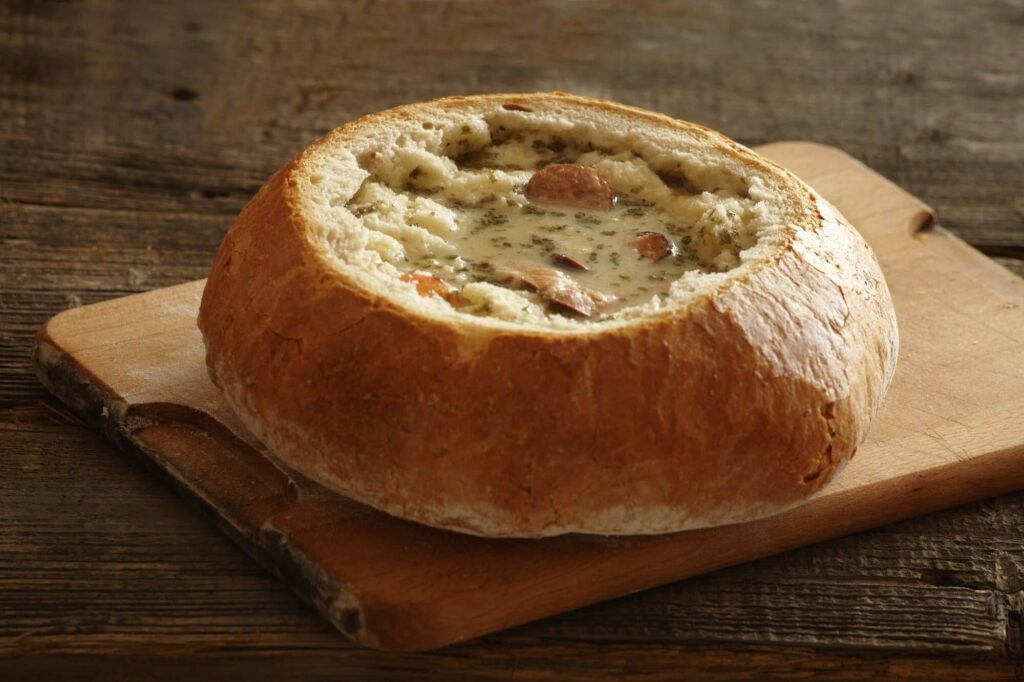
Żurek is a sour rye soup made using fermented rye starter. Served with sausage, egg, and sometimes in a bread bowl, it is one of the most distinctive dishes in this food.
Gołąbki
Gołąbki are cabbage rolls stuffed with minced meat and rice, then simmered in tomato or mushroom sauce. This dish showcases the practical elegance of Polish food.
Polish Soups: The Backbone of Polish Food
Soups are central to this food, often served as the main course rather than a starter.
Barszcz
Barszcz is a beetroot soup with a sweet-sour profile, served clear or with dumplings. It is especially associated with Christmas Eve meals.
Rosół
Rosół is a clear chicken broth, traditionally served on Sundays. It represents the emotional comfort aspect of Polish food.
Kapuśniak
This cabbage-based soup highlights Poland’s love of fermented flavours and is another pillar of everyday Polish food.
Regional Variations in Polish Food
Although unified by tradition, it varies by region.
Southern Poland
Mountain regions favour smoked cheeses, lamb, and hearty stews.
Eastern Poland
Dishes here often show influences from neighbouring cuisines, with dumplings, buckwheat, and soups dominating these food traditions.
Northern Poland
Fish dishes appear more frequently, reflecting access to lakes and the Baltic Sea.
These regional differences enrich the diversity of this food while maintaining its core identity.
Polish Street Food and Casual Eating
Modern travellers often discover it through casual dining.
Popular street-style this food includes:
- Zapiekanka (open-faced baguette with mushrooms and cheese)
- Sausages served with mustard
- Potato pancakes eaten on the go
Street food highlights how it adapts to modern lifestyles without losing authenticity.
Desserts and Sweets in Polish Food
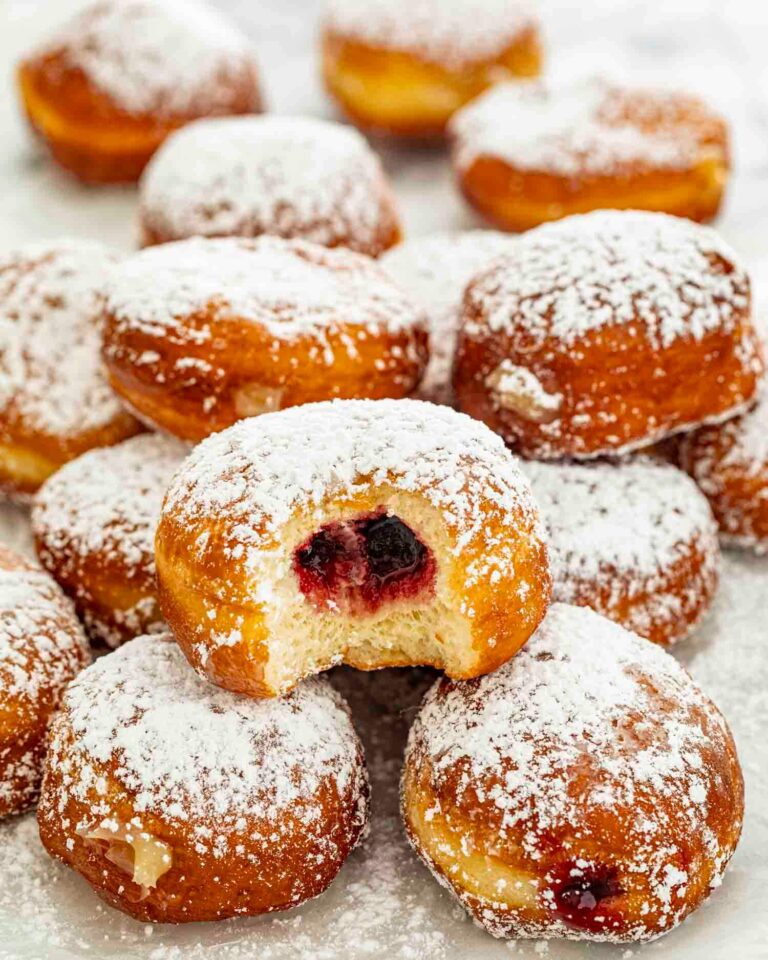
Sweet dishes are an important part of this food, often tied to celebrations.
Pączki
These filled doughnuts are especially popular on Fat Thursday and are a beloved symbol of Polish dessert culture.
Sernik
Polish cheesecake is dense and rich, made with farmer’s cheese rather than cream cheese.
Makowiec
A poppy seed roll traditionally served during holidays, showcasing the festive side of this food.
Polish Food and Cultural Traditions
It is deeply connected to religious and family traditions.
- Christmas Eve meals are meatless and symbolic
- Easter foods focus on eggs, sausage, and bread
- Sunday lunches remain culturally significant
Food is not just nourishment in Poland—it is memory, identity, and continuity.
Is Polish Food Healthy?
While it is often described as heavy, it can be balanced when prepared thoughtfully.
Benefits of it include:
- Fermented foods supporting gut health
- Hearty soups rich in nutrients
- Seasonal and locally sourced ingredients
Modern Polish cooking increasingly incorporates lighter methods while preserving traditional flavours.
Polish Food in the Modern World
Contemporary chefs are reimagining this food, blending tradition with innovation. Plant-based pierogi, refined presentations, and global influences are helping Polish cuisine gain international recognition while staying true to its roots.
Frequently Asked Questions
What is Polish food known for?
It is known for dumplings, soups, fermented ingredients, and hearty comfort dishes.
Is it similar to other Eastern European cuisines?
It shares similarities with neighbouring cuisines but stands out for its heavy use of soups, rye, and fermentation.
What is the most popular Polish dish?
Pierogi are the most internationally recognised example of Polish food.
Is it spicy?
Traditional Polish food is mild, relying on herbs and acidity rather than heat.
Can vegetarians eat this food?
Yes. Many traditional Polish food dishes are vegetarian, including pierogi, soups, and potato-based meals.
Final Thoughts
Polish food is honest, comforting, and deeply tied to history and family. It tells a story of resilience, seasonality, and shared meals passed down through generations. Whether you are tasting pierogi for the first time or exploring regional soups, it offers a rich culinary journey that continues to captivate both locals and visitors alike.