Last updated: August 2026 | Written by J
Polish food is known for hearty meals, comforting flavors, and simple ingredients used in satisfying ways. Potatoes, cabbage, pork, mushrooms, rye bread, dairy, and seasonal vegetables appear across many traditional Polish dishes.
Pierogi may be the best-known example, but Polish cuisine goes far beyond dumplings. You will also find sour soups, slow-cooked stews, breaded meats, smoked sausage, stuffed cabbage, street snacks, and rich desserts.
If you are exploring Polish food for the first time, these traditional dishes are a good place to start.
Popular Polish Food at a Glance
|
Polish dish |
What it is |
|
Pierogi |
Dumplings filled with savory or sweet ingredients |
|
Bigos |
Slow-cooked cabbage and meat stew |
|
Żurek |
Sour rye soup, often served with sausage and egg |
|
Kotlet schabowy |
Breaded pork cutlet |
|
Gołąbki |
Cabbage rolls filled with meat and rice |
|
Kielbasa |
Polish sausage served in many different styles |
|
Barszcz |
Beet soup, sometimes served with dumplings |
|
Pączki |
Filled Polish doughnuts |
|
Placki ziemniaczane |
Crispy potato pancakes |
|
Sernik |
Polish-style cheesecake |
What Is Traditional Polish Food Like?
Traditional Polish food is usually filling rather than complicated. Many dishes developed around ingredients that could be grown locally, preserved, pickled, smoked, or stored through colder months.
Common ingredients include potatoes, cabbage, beets, mushrooms, pork, sausage, flour, eggs, sour cream, dill, onions, and rye.
Sour and savory flavors are especially common. Fermented rye gives żurek its distinctive taste, pickled cucumbers appear in soups and side dishes, and sauerkraut plays an important role in meals such as bigos.
Polish cuisine also changes by region and season, so the food you encounter can vary depending on where you are.
1. Pierogi
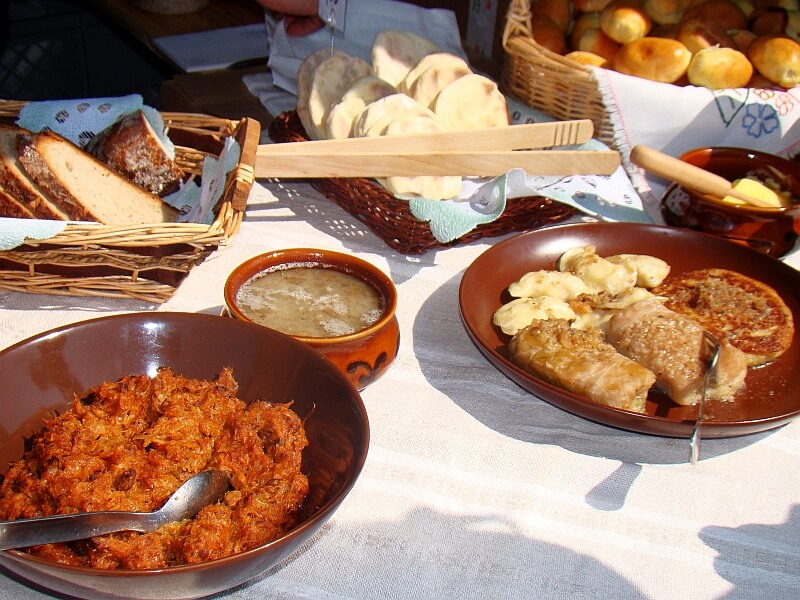
Pierogi are one of the most recognizable Polish dishes. These soft dumplings are made from thin dough wrapped around a filling, then boiled and sometimes pan-fried.
Popular savory fillings include potato and cheese, meat, sauerkraut, and mushrooms. Sweet versions may contain berries, sweet cheese, or fruit.
Pierogi ruskie, usually filled with potato, cheese, and onion, are among the most familiar varieties.
2. Bigos
Bigos is a rich stew made with cabbage or sauerkraut and different types of meat. Sausage, pork, mushrooms, onions, and spices may also be added.
The dish is cooked slowly so the ingredients can develop a deep, savory flavor. Recipes differ between households, which means there is no single version you will encounter everywhere.
3. Żurek
Żurek is a sour rye soup with a flavor unlike most other European soups.
It is traditionally made using fermented rye flour and may contain white sausage, potatoes, marjoram, and hard-boiled egg. The soup is creamy, tangy, and filling.
It is especially associated with Easter, although it is eaten throughout the year.
4. Kotlet Schabowy
Kotlet schabowy is a breaded pork cutlet similar in appearance to schnitzel.
A pork chop is flattened, coated in flour, egg, and breadcrumbs, then fried until crisp. It is commonly served with potatoes and cabbage or another simple salad.
For travelers looking for a familiar introduction to Polish food, this is one of the easiest dishes to start with.
5. Gołąbki
Gołąbki are cabbage leaves wrapped around a filling, traditionally made with minced meat and rice or another grain.
The rolls are cooked until tender and often served with tomato sauce.
Despite the name translating to “little pigeons,” the traditional dish does not contain pigeon.
6. Kielbasa
Kielbasa simply means sausage in Polish, so it refers to a broad category rather than one specific recipe.
Polish sausages can be smoked, fresh, dried, thin, thick, mild, or strongly seasoned. They may be grilled, fried, added to soups and stews, or eaten with bread, mustard, and pickles.
7. Placki Ziemniaczane
Placki ziemniaczane are Polish potato pancakes made from grated potatoes, onion, egg, and flour.
They are fried until crisp on the outside while staying soft inside.
They may be served with sour cream, mushroom sauce, meat sauce, or even sugar, depending on the region and personal preference.
8. Barszcz
Barszcz is a beet-based soup known for its deep red color and earthy flavor.
Some versions are served as a clear broth, while others include vegetables or additional ingredients. At Christmas, clear barszcz is often served with small mushroom-filled dumplings called uszka.
9. Rosół
Rosół is a clear chicken broth and one of the simplest traditional Polish soups.
It is usually served with thin noodles and may include carrots, parsley, celery, and herbs.
It is common at family meals and Sunday lunches because of its mild, comforting flavor.
10. Zupa Ogórkowa
Zupa ogórkowa is Polish pickle soup.
It is made with sour pickled cucumbers, potatoes, vegetables, and broth. Sour cream is often added for a smoother texture.
The result is tangy and savory rather than sharply acidic.
11. Flaki
Flaki is a traditional tripe soup with a thick broth and warming spices.
Recipes vary, but marjoram, pepper, vegetables, and beef stock are common ingredients.
Its main ingredient makes it one of the more adventurous dishes on this list.
12. Kopytka
Kopytka are soft potato dumplings shaped into small pieces.
They are often compared with gnocchi, although their preparation and serving styles are distinctly Polish.
Kopytka can be served with meat sauces, mushrooms, buttered breadcrumbs, or other simple toppings.
13. Pyzy
Pyzy are another type of Polish potato dumpling.
Some are made entirely from potato dough, while others are filled with meat. They are typically boiled and served with fried onions, bacon, or sauce.
14. Kaszanka
Kaszanka is a traditional sausage made with blood, buckwheat or barley, and seasonings.
It is often grilled or fried with onions.
The flavor is rich and savory, making it a better choice for diners who already enjoy blood sausage or similar dishes.
15. Zapiekanka
Zapiekanka is one of Poland’s best-known street foods.
It starts with a long piece of bread topped with mushrooms and melted cheese. Ketchup is a common finishing touch, although modern versions may include meat, vegetables, sauces, or other toppings.
The dish is especially associated with Kraków, where it remains a familiar part of the city’s street food culture.
16. Obwarzanek Krakowski
Obwarzanek Krakowski is a ring-shaped bread associated with Kraków.
The dough is boiled before baking, which gives the bread a chewy texture. It is often topped with sesame seeds, poppy seeds, or salt.
The name Obwarzanek Krakowski has Protected Geographical Indication status in the European Union.
17. Oscypek
Oscypek is a smoked sheep’s milk cheese associated with the mountain region of southern Poland.
It has a firm texture and salty, smoky flavor. It is often grilled and served warm, sometimes with cranberry sauce.
Oscypek is registered as a Protected Designation of Origin in the European Union.
18. Mizeria
Mizeria is a cucumber salad often served alongside meat and potatoes.
Thin cucumber slices are mixed with sour cream or a creamy dressing, then flavored with dill and seasoning.
Its fresh taste helps balance heavier Polish dishes.
19. Kapusta Kiszona
Kapusta kiszona is Polish sauerkraut.
Fermented cabbage is eaten as a side dish and used in foods such as bigos, pierogi, and soups.
Its sharp, sour flavor is one of the defining tastes in traditional Polish cooking.
20. Pączki
Pączki are rich Polish doughnuts traditionally filled with jam, rose preserve, custard, or another sweet filling.
They are usually softer and richer than standard ring-shaped doughnuts and are finished with powdered sugar, glaze, or candied peel.
21. Sernik
Sernik is Polish cheesecake.
Traditional versions are made with twaróg, a Polish curd cheese that gives the cake a different texture from cheesecake made with cream cheese.
Some recipes include raisins, chocolate, fruit, or a pastry base.
22. Szarlotka
Szarlotka is a Polish apple cake or apple pie.
It usually combines cooked apples with a buttery pastry or crumbly cake base. Cinnamon may also be added.
It is commonly served as a dessert with coffee or tea.
23. Makowiec
Makowiec is a rolled cake filled with a sweet poppy seed mixture.
The filling may also contain nuts, raisins, honey, or dried fruit.
It is strongly associated with Christmas and other celebrations.
24. Piernik
Piernik is Polish gingerbread flavored with spices such as cinnamon, cloves, and ginger.
It can range from soft cake to firmer gingerbread cookies. Some versions include jam, chocolate, or fruit preserves.
25. Racuchy
Racuchy are small Polish pancakes, often made with apples.
They are fried until golden and usually served with powdered sugar. Depending on the recipe, yeast may be used to give them a light, fluffy texture.
Regional Polish Food Worth Knowing
Polish cuisine changes noticeably across the country, and exploring regional Polish food traditions reveals dishes that may not be common nationwide.
Southern Poland is associated with mountain cheeses such as oscypek, while Silesian cooking includes dishes such as kluski śląskie, soft potato dumplings often served with meat and gravy.
Kraków is closely connected with obwarzanek and zapiekanka, while coastal areas naturally feature more fish.
Regional differences are one reason traditional Polish food cannot be reduced to pierogi and sausage alone.
Polish Food for Vegetarians
Although many traditional Polish dishes contain pork, sausage, or other meats, there are vegetarian options.
Pierogi may be filled with potato and cheese, cabbage and mushroom, fruit, or sweet cheese. Potato pancakes, mushroom soups, salads, vegetable dishes, and some dumplings can also be meat-free.
Recipes vary, so it is worth checking whether broth, bacon, or other meat products have been added to a dish.
What Polish Food Should You Try First?
If you are new to Polish cuisine, start with dishes that show different sides of the food.
Try pierogi for dumplings, żurek for a traditional soup, bigos for a slow-cooked main dish, kotlet schabowy for a familiar comfort meal, and pączki for dessert.
Together, they provide a simple introduction to the savory, sour, smoky, and sweet flavors found across Polish cooking.
FAQs
What is the most famous Polish food?
Pierogi are among the most widely recognized Polish foods. These dumplings can contain savory or sweet fillings and are served in many different ways.
What is Poland's national dish?
Bigos is commonly associated with Polish national cuisine, although Poland has several dishes with strong cultural importance rather than a single food that represents every region.
Is Polish food spicy?
Most traditional Polish food is not very hot. Flavor usually comes from herbs, pepper, garlic, onions, horseradish, mustard, fermentation, smoking, and pickling rather than chili peppers.
What are the main ingredients in Polish cuisine?
Common ingredients include potatoes, cabbage, pork, sausage, mushrooms, beets, rye, flour, eggs, dairy products, onions, dill, and pickled vegetables.
Is Polish food vegetarian-friendly?
There are vegetarian Polish dishes, particularly dumplings, potato dishes, salads, mushroom dishes, and desserts. However, some seemingly vegetarian foods may use meat-based broth or toppings, so ingredients should be checked.
What Polish food should a first-time visitor try?
Pierogi, żurek, bigos, kotlet schabowy, kielbasa, zapiekanka, and pączki offer a varied introduction to traditional Polish cuisine.