Last updated: August 2026 | Written by J
Transportation connects people, goods and services across cities, countries and continents. It supports everyday travel, international trade, tourism and the movement of essential supplies.
Transportation can broadly be grouped into land, water and air transportation. In logistics and transport planning, five major modes are commonly discussed: road, rail, water, air and pipeline transportation.
Each mode has different advantages, costs, speeds and uses. Some are designed mainly for passengers, while others are better suited to freight.
What Is Transportation?
Transportation is the movement of people, animals or goods from one location to another.
It can involve vehicles such as cars, buses, trains, ships and aircraft, as well as supporting infrastructure such as roads, railway tracks, airports, ports and pipelines.
The right form of transportation depends on factors such as:
- Distance
- Travel time
- Cost
- Passenger or cargo volume
- Accessibility
- Safety
Environmental impact
What Are the Main Types of Transportation?
There are several ways to classify transportation.
At the broadest level, transportation is divided into:
- Land transportation
- Water transportation
- Air transportation
For logistics and freight movement, transportation is often divided into five major modes:
- Road
- Rail
- Water
- Air
- Pipeline
The Bureau of Transportation Statistics also reports freight movements by transportation mode, including truck, rail, water, air, pipeline and multimodal transport.
Other forms, including cable transport, animal-powered transport and space transport, can also be included depending on the context.
1. Land Transportation
Land transportation refers to the movement of people or goods across the ground. It includes road transport, rail transport and human-powered travel.
It is one of the most widely used types of transportation because it supports both short and long-distance journeys.
Road Transportation
Road transportation uses vehicles travelling on streets, highways and other road networks.
Common examples include:
- Cars
- Buses
- Coaches
- Trucks
- Motorcycles
- Taxis
- Vans
- Ride-sharing vehicles
- Electric vehicles
- Bicycles
- E-bikes
- E-scooters
Road transport is flexible because vehicles can travel directly between many locations without requiring a station or terminal.
Best suited for: local travel, commuting, deliveries and short to medium-distance freight.
Advantages:
- Flexible routes
- Door-to-door service
- Suitable for short distances
- Wide road network availability
Limitations:
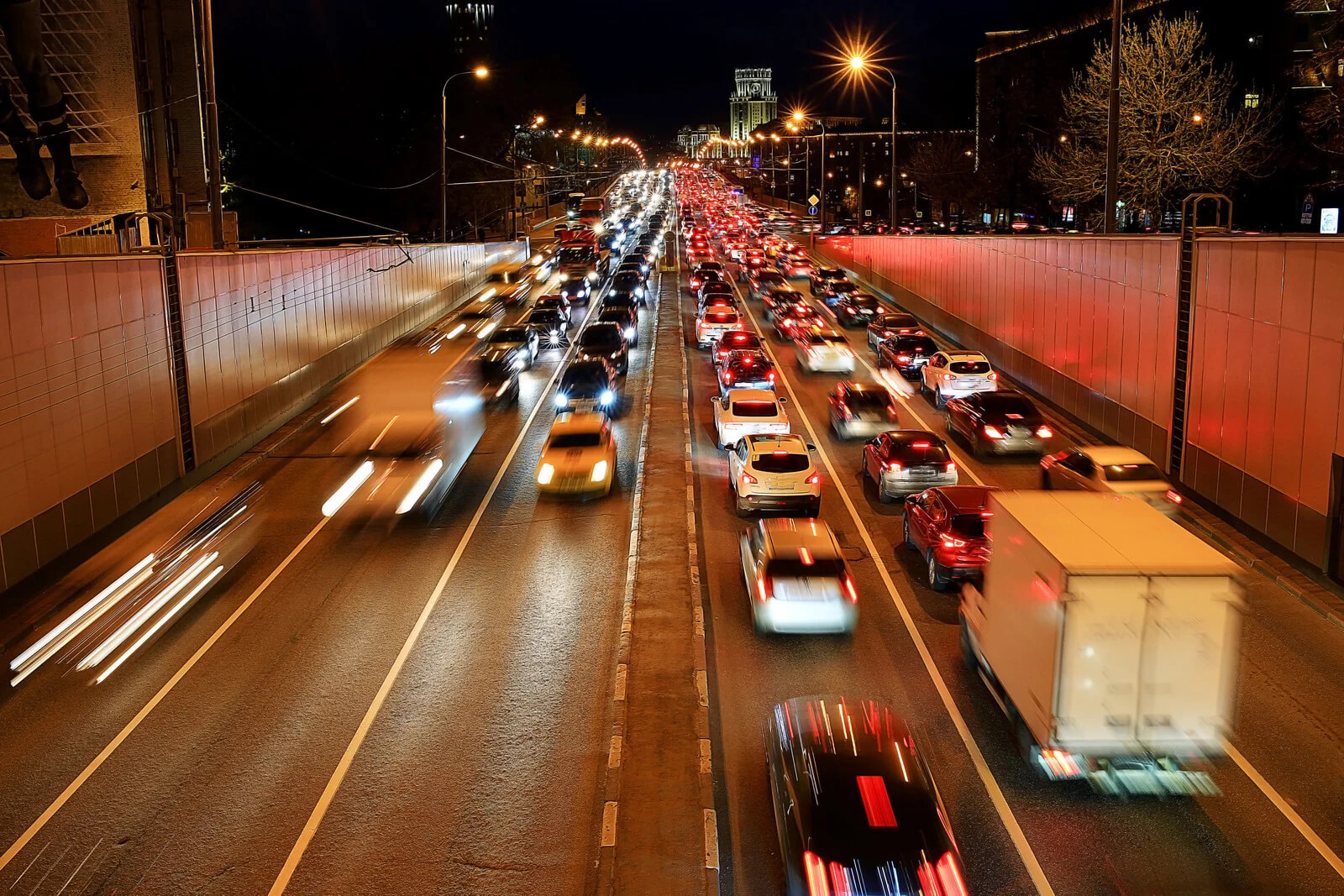
- Traffic congestion
- Fuel and maintenance costs
- Limited capacity compared with rail or ships
- Can create significant emissions depending on the vehicle
Rail Transportation
Rail transportation moves passengers and freight using vehicles that travel along fixed railway tracks.
Examples include:
- Passenger trains
- Freight trains
- Metro systems
- Subways
- Trams
- Light rail
- High-speed trains
- Maglev trains
Rail transport is especially useful when large numbers of passengers or large quantities of goods need to move along established routes.
Best suited for: urban commuting, intercity travel and high-volume freight.
Advantages:
- High passenger capacity
- Efficient for bulk freight
- Reliable travel routes
- Often more energy efficient per passenger than private cars
Limitations:
- Fixed routes
- High infrastructure costs
- Limited access outside railway networks
Human-Powered Transportation
Human-powered transportation relies primarily on physical movement rather than an engine.
Examples include:
- Walking
- Cycling
- Skateboarding
- Scooters
- Pedicabs
These options are most practical for shorter distances.
2. Water Transportation
Water transportation moves people and goods across oceans, rivers, lakes and canals.
It has played an important role in trade for centuries and remains essential for moving large quantities of cargo internationally. According to the International Maritime Organization, international shipping carries a major share of global trade.
Examples include:
- Cargo ships
- Container ships
- Ferries
- Cruise ships
- Boats
- Barges
- Tankers
- Sailboats
- Water taxis
Large ships can carry significantly more cargo than trucks or aircraft, making water transport particularly useful for international freight.
Best suited for: international trade, bulk cargo, island transport and tourism.
Advantages:
- Very high cargo capacity
- Cost-effective for large shipments
- Suitable for heavy and oversized goods
- Connects ports around the world
Limitations:
- Slower than air transportation
- Dependent on ports and waterways
- Weather can affect schedules
Additional road or rail transport may be needed at each end
3. Air Transportation
Air transportation moves passengers and freight through the air.
It is generally the fastest option for travelling long distances, particularly between countries or continents. The International Civil Aviation Organization publishes global aviation data covering passenger and freight activity.
Examples include:
- Passenger airplanes
- Cargo aircraft
- Helicopters
- Private jets
- Seaplanes
- Drones
Air freight is commonly used for urgent, valuable or time-sensitive goods.
Best suited for: international passenger travel, urgent freight and long-distance journeys.
Advantages:
- Fastest long-distance transportation
- Connects distant regions
- Useful for urgent deliveries
- Suitable for areas separated by oceans or difficult terrain
Limitations:
- Higher cost
- Limited cargo capacity compared with ships
- Dependent on airports
Significant environmental impact
4. Pipeline Transportation
Pipeline transportation moves liquids, gases and some specialised materials through networks of pipes.
Unlike most transportation methods, it does not usually involve vehicles.
Common materials transported through pipelines include:
- Crude oil
- Natural gas
- Petroleum products
- Water
- Chemicals
The US Pipeline and Hazardous Materials Safety Administration oversees pipeline safety and provides information about the transportation of hazardous materials through pipeline networks.
Pipelines are designed for continuous transportation between fixed locations.
Best suited for: moving liquids and gases over long distances.
Advantages:
- Continuous operation
- Large transport capacity
- Low labour requirements once operating
- Less affected by road traffic or weather
Limitations:
- High installation cost
- Fixed routes
- Limited to suitable materials
Leaks can cause environmental damage
5. Other Types of Transportation
Not every form of transportation fits neatly into the five major modes.
Cable Transportation
Cable transport moves passengers or goods using cables.
Examples include:
- Cable cars
- Gondolas
- Chairlifts
- Funicular railways
These systems are often used in mountains, tourist destinations and areas where conventional roads are difficult to build.
Animal-Powered Transportation
Animals have been used for transportation for thousands of years and remain important in some locations.
Examples include:
- Horse-drawn carriages
- Camels
- Donkeys
- Ox carts
- Dog sleds
Space Transportation
Space transportation includes vehicles designed to travel beyond Earth’s atmosphere.
Examples include:
- Rockets
- Spacecraft
- Cargo spacecraft
NASA’s spacecraft and rocket resources provide examples of vehicles used for human spaceflight, exploration and cargo missions.
Transportation Types Compared
| Type | Common examples | Speed | Capacity | Best use |
|---|---|---|---|---|
| Road | Cars, buses, trucks | Medium | Low to medium | Local travel and deliveries |
| Rail | Trains, metros, trams | Medium to fast | High | Commuting and bulk freight |
| Water | Ships, ferries, barges | Slow | Very high | International and bulk freight |
| Air | Planes, helicopters | Very fast | Medium | Long-distance travel and urgent freight |
| Pipeline | Oil and gas pipelines | Continuous | High | Liquids and gases |
No single transportation mode is best for every journey.
A passenger travelling between continents may choose air transportation, while a company shipping thousands of containers internationally may use sea freight.
Cost and speed are not the only considerations. Different transport modes also have different environmental impacts. The US Environmental Protection Agency provides data on greenhouse gas emissions from cars, trucks, aircraft, ships, rail and other transport sources.
Public vs Private Transportation
Transportation can also be classified according to who uses or operates it.
Public Transportation
Public transportation is available for shared use by members of the public.
Examples include:
- Buses
- Trains
- Subways
- Trams
- Public ferries
Public transport can reduce the number of individual vehicles needed to move large numbers of people.
Private Transportation
Private transportation is used by individuals or organisations rather than the general public.
Examples include:
- Private cars
- Motorcycles
- Company vehicles
- Private aircraft
- Private boats
Private transport usually provides greater flexibility but may cost more per passenger.
Passenger vs Freight Transportation
Another useful distinction is whether transportation is moving people or goods.
Passenger transportation includes cars, buses, trains, ferries and aircraft designed mainly to carry people.
Freight transportation focuses on cargo and may involve:
- Trucks
- Freight trains
- Container ships
- Cargo aircraft
- Pipelines
Many transport networks support both passenger and freight services.
How to Choose a Mode of Transportation?
Choosing the best transportation method depends on the journey or shipment.
Consider:
Distance: Walking or cycling may work for short journeys, while planes and trains are better suited to longer distances.
Speed: Air transport is generally fastest for long-distance travel.
Cost: Water and rail transport can be economical for large freight volumes.
Capacity: Ships and trains can carry much larger loads than cars or aircraft.
Accessibility: Road transportation often provides better door-to-door access.
Type of cargo: Perishable or urgent products may require air freight, while oil and gas may be moved through pipelines.
Often, several modes are used together. A shipment might travel by ship to a port, continue by train to a regional hub and complete the journey by truck. This is known as multimodal transportation.
Summary
The main types of transportation are land, water and air, while road, rail, water, air and pipeline transport are commonly recognised as the five major modes used in transport and logistics.
Each serves a different purpose. Road transport offers flexibility, rail moves large numbers of people and goods efficiently, ships handle high-volume international freight, aircraft provide speed, and pipelines continuously transport liquids and gases.
Understanding the differences makes it easier to choose the right transportation method based on distance, cost, speed, capacity and purpose.
FAQs
What are the three main types of transportation?
The three broad categories are land, water and air transportation. Each category contains several individual modes and vehicles.
What are the five major modes of transportation?
The five major modes commonly used in logistics are road, rail, water, air and pipeline transportation.
What are examples of land transportation?
Cars, buses, trucks, motorcycles, bicycles, trains, trams and subways are common examples of land transportation.
What is the most sustainable type of transportation?
Public transit, cycling, and electric rail are considered among the most sustainable types.
What is the fastest mode of transportation?
Air transportation is generally the fastest option for long-distance passenger travel and freight.
Which transportation method carries large amounts of freight?
Water transportation is well suited to large volumes of cargo, particularly through container ships, tankers and bulk carriers.
What is the difference between a mode and a means of transportation?
A mode of transportation is a broad category such as road, rail, air or water. A means of transportation is the specific vehicle or method used, such as a car, train, airplane or ship.
What is multimodal transportation?
Multimodal transportation uses two or more transport modes during a single journey or shipment. For example, goods may travel by ship, train and truck before reaching their destination.
What are some modern forms of transportation?
Modern transportation includes electric vehicles, e-bikes, high-speed rail, maglev trains, drones and developing autonomous vehicle systems.
Leave a Reply