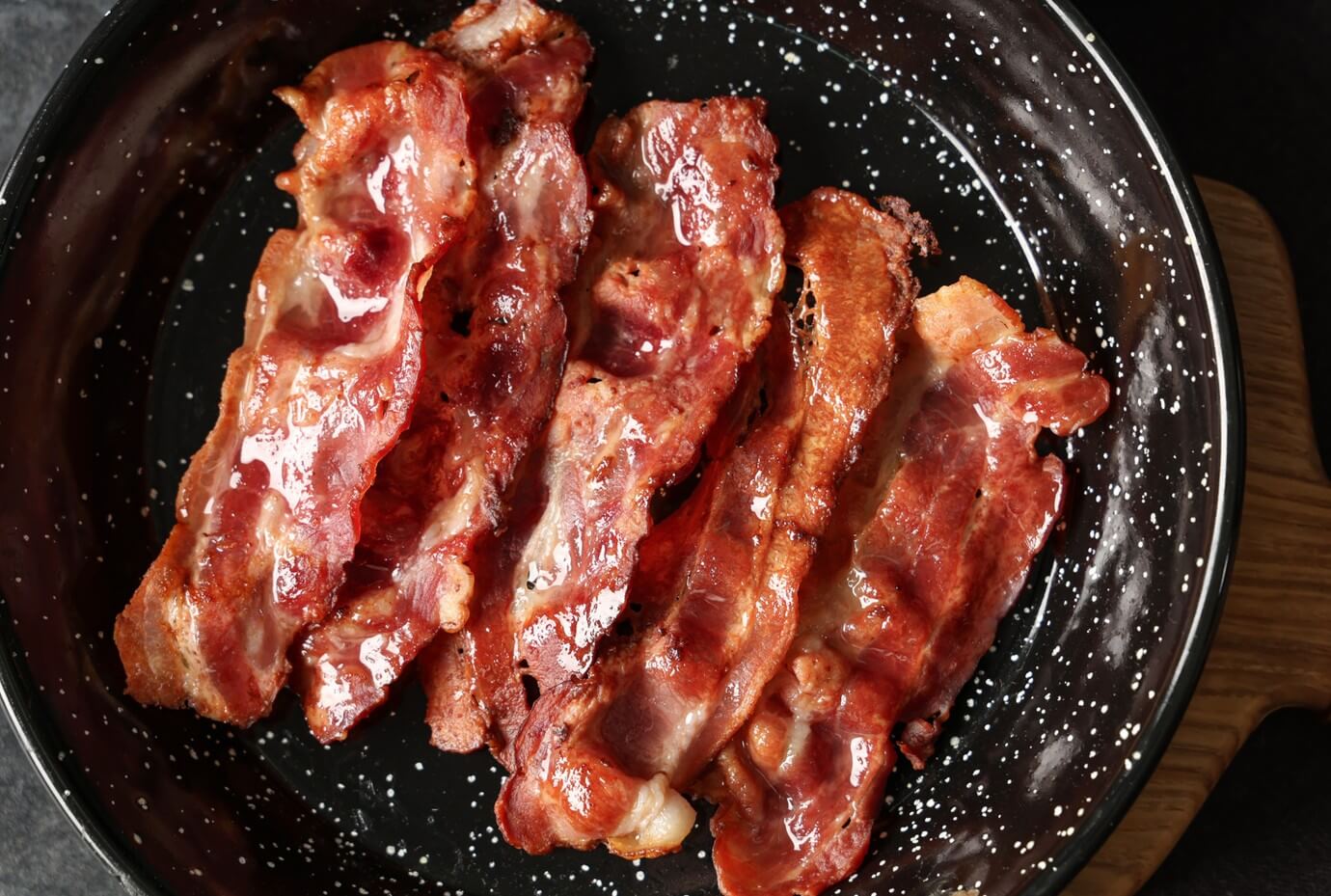
Learning how to cook bacon in the oven is one of the easiest ways to make evenly crisp bacon with less mess. Arrange the bacon in a single layer on a lined baking sheet, bake it at 400°F for 12 to 20 minutes, then drain it on paper towels.
Regular-cut bacon generally takes 12 to 16 minutes, while thick-cut bacon may need 16 to 22 minutes. The exact time depends on the thickness of the bacon, your oven and how crispy you prefer it.
This oven-baked bacon method is ideal when cooking breakfast for a family, preparing bacon for recipes or making a large batch ahead of time.
Why Cook Bacon in the Oven?
Cooking bacon on the stovetop works well for a few slices, but it requires close attention. Grease can splatter, slices may cook unevenly and several batches may be needed.
Baking bacon in the oven offers several advantages:
- The bacon cooks more evenly.
- You can prepare an entire pack at once.
- There is no need to stand over a frying pan.
- Grease splatter is easier to contain.
- Cleanup is simpler when the tray is lined.
- The bacon stays flatter as it cooks.
It is also easier to control the final texture because you can remove individual slices when they reach your preferred level of crispness.
Bacon Cooking Time and Temperature
For most bacon, 400°F is the best oven temperature. It is hot enough to render the fat and crisp the edges without burning the bacon too quickly.
Use the following times as a guide:
| Bacon type | Oven temperature | Approximate cooking time |
| Thin-cut bacon | 400°F | 10–14 minutes |
| Regular-cut bacon | 400°F | 12–16 minutes |
| Thick-cut bacon | 400°F | 16–22 minutes |
| Extra-thick bacon | 400°F | 20–25 minutes |
| Turkey bacon | 400°F | 10–15 minutes |
| Convection oven | 375°F | Begin checking at 10 minutes |
Cooking times vary between bacon brands and ovens. Start checking the bacon several minutes before the suggested time, especially when using thin slices.
What You Need
You only need a few basic items:
- Bacon
- A rimmed baking sheet
- Parchment paper or aluminium foil
- Kitchen tongs
- Paper towels
- A wire cooling rack, optional
A rimmed baking sheet is important because it keeps the rendered bacon grease from spilling into the oven.
How to Cook Bacon in the Oven Step by Step
1. Preheat the Oven
Preheat your oven to 400°F.
Position a rack in the centre of the oven so the bacon receives even heat from above and below.
2. Line the Baking Sheet
Line a rimmed baking sheet with parchment paper or aluminium foil.
Parchment paper makes cleanup easy and reduces sticking. Foil also works well and can be folded around the cooled grease before disposal.
Do not use wax paper because it is not designed for oven temperatures.
3. Arrange the Bacon
Place the bacon strips in a single layer on the lined baking sheet.
The slices can sit close together because they will shrink as they cook, but they should not overlap. Overlapping sections may remain soft and cook unevenly.
One standard baking sheet usually holds eight to 12 strips, depending on their size.
4. Bake Until Crisp
Place the tray in the centre of the preheated oven.
Bake regular-cut bacon for approximately 12 to 16 minutes. Thick-cut bacon may require 16 to 22 minutes.
There is usually no need to flip the bacon. Begin checking it early and remove the tray when the bacon is slightly less crisp than you want. It will continue to firm as it cools.
5. Drain and Rest
Use tongs to transfer the cooked bacon to a paper towel-lined plate.
Let it rest for two to three minutes. The paper towels absorb excess grease while the bacon finishes crisping.
Serve immediately or allow it to cool before storing.
Should You Start Bacon in a Cold Oven?
Some cooks place bacon in a cold oven and then set the temperature to 400°F. This gives the fat more time to render as the oven heats.
The cold-oven method can produce evenly cooked bacon, but the total cooking time is less predictable because ovens preheat at different speeds.
A preheated oven provides more consistent timing, which makes it the better choice when following a recipe. Starting with a cold oven may still work well when you are not concerned about an exact serving time.
Whichever method you choose, check the bacon frequently near the end of cooking.
Parchment Paper or Aluminium Foil?
Both materials work, but each has different benefits.
Parchment paper provides a non-stick surface and makes it easy to lift the cooked bacon from the tray. It is a good choice when you want simple cleanup without pressing the bacon into the grease.
Aluminium foil contains the grease well and can be folded for disposal after the fat has cooled. Bacon may stick slightly more to foil, especially if it is removed before becoming crisp.
For most home cooks, parchment paper offers the best balance of even cooking and easy cleanup.
Should You Use a Wire Rack?
A wire rack allows bacon grease to drip beneath the slices. This may produce bacon that feels drier and slightly crispier on both sides.
However, a rack is not required. Bacon placed directly on parchment cooks in its rendered fat, which encourages browning and gives it a rich flavour.
A rack also takes longer to clean.
Use a wire rack when you want very crisp bacon with less surface grease. Bake directly on parchment when you prefer easier cleanup and slightly more tender centres.
How to Keep Bacon from Splattering
Oven-baked bacon usually creates less mess than frying, but some splattering can still occur.
To reduce it:
- Use a deep, rimmed baking sheet.
- Keep the oven at 400°F or below.
- Do not place wet bacon in the oven.
- Avoid opening the oven repeatedly.
- Line the tray fully so grease cannot reach the metal edges.
Do not cover the bacon tightly while it cooks because trapped steam can prevent it from becoming crisp.
When removing the tray, move it slowly. Hot rendered fat can shift quickly and may cause burns.
Common Mistakes to Avoid
Overlapping the Bacon
Overlapping strips do not receive equal heat. Arrange them in one layer, even when cooking a large batch.
Waiting Until It Looks Completely Crisp
Bacon becomes firmer after it leaves the oven. Remove it when it is browned and slightly softer than your ideal texture.
Using a Flat Baking Sheet
Always use a rimmed tray. Bacon releases a significant amount of grease that can spill from a flat sheet.
Ignoring Bacon Thickness
Thin bacon can burn while thick bacon is still cooking. Adjust the timing based on the cut rather than relying on one fixed number.
Pouring Grease Down the Drain
Bacon grease hardens as it cools and can block plumbing. Save it for cooking or allow it to solidify before disposing of it in the bin.
Cooking Two Trays of Bacon at Once
You can cook two trays at the same time, although they may not brown as evenly as a single tray.
Place one tray in the upper third of the oven and the other in the lower third. Rotate the trays and switch their positions halfway through cooking.
The bacon may require several extra minutes because two trays reduce air circulation. A convection setting can help distribute heat more evenly.
How to Store and Reheat Cooked Bacon
Let leftover bacon cool completely before storing it. Place the slices between sheets of paper towel in an airtight container and refrigerate them for up to four days. For more detailed guidance on cooling, storing and reheating cooked food safely, see the USDA leftovers and food safety guide.
To reheat bacon:
- Oven: Heat at 350°F for five to eight minutes.
- Air fryer: Heat at 350°F for two to four minutes.
- Microwave: Place between paper towels and heat in 15-second intervals.
- Frying pan: Warm over medium-low heat for one to two minutes per side.
The oven and air fryer are the best options for restoring crispness.
Cooked bacon can also be frozen. Place cooled slices between sheets of parchment, store them in a freezer-safe container and freeze for up to two months.
What to Do with Bacon Grease
Bacon grease can add flavour to eggs, roast vegetables, potatoes, cornbread and savoury sauces.
To save it, allow the grease to cool slightly without becoming solid. Pour it through a fine-mesh strainer into a clean heatproof container. Cover and refrigerate it.
Do not pour very hot fat into a cold glass container because the sudden temperature change may crack the glass.
Discard the grease when it develops an unpleasant smell, unusual colour or signs of mould.
Easy Oven-Baked Bacon Recipe
Preparation time: 5 minutes
Cooking time: 12–22 minutes
Servings: 4–6
Ingredients
- 12 slices of bacon
Instructions
- Preheat the oven to 400°F.
- Line a rimmed baking sheet with parchment paper.
- Arrange the bacon in a single, non-overlapping layer.
- Bake regular-cut bacon for 12 to 16 minutes or thick-cut bacon for 16 to 22 minutes.
- Remove the bacon when it is browned and nearly as crisp as desired.
- Transfer it to paper towels and rest for two to three minutes.
- Serve warm.
This method makes crisp, evenly cooked bacon without constant flipping or stovetop splatter. Once you know how to cook bacon in the oven, it is an easy technique to use for breakfasts, sandwiches, salads and make-ahead meals.
FAQs
What temperature is best for cooking bacon in the oven?
For most regular and thick-cut bacon, 400°F provides the best balance of rendered fat, browned edges and crisp texture. Thin bacon can also be cooked at 375°F if you are concerned about burning it.
How long does bacon take at 400°F?
Regular-cut bacon generally takes 12 to 16 minutes at 400°F. Thick-cut bacon may take 16 to 22 minutes. Begin checking early because cooking time varies by oven, thickness and preferred crispness.
Do you need to flip bacon in the oven?
No. Bacon generally cooks evenly without flipping when it is arranged in a single layer on a lined baking sheet. Flipping may be useful when using an older oven with uneven heat, but it is not normally necessary.
Can you cook frozen bacon in the oven?
Frozen bacon should be separated before baking. If the slices are stuck together, warm the unopened pack briefly under cool or lukewarm water until they can be pulled apart. Arrange them on the tray and add several minutes to the normal cooking time.
Can you cook turkey bacon using this method?
Yes. Arrange turkey bacon in a single layer and bake it at 400°F for approximately 10 to 15 minutes. Because turkey bacon contains less fat, check it early to prevent it from becoming dry.
Is bacon crispier on a rack?
A rack allows hot air to move around the bacon and lets grease drip away, which can make the slices drier and crispier. Bacon cooked directly on parchment can still become crisp and usually develops stronger browning.
How do you know when bacon is done?
Bacon is ready when the fat has rendered, the meat is browned and the edges appear crisp. Remove it slightly before it reaches your preferred texture because it will continue to firm as it cools.